
Share Dr. William Henry Adler, Iii's obituary with others.
Invite friends and family to read the obituary and add memories.
Stay updated
We'll notify you when service details or new memories are added.
You're now following this obituary
We'll email you when there are updates.
Select your format and elements to print

IN LOVING MEMORY OF Dr. William Henry Adler, Iii
William Henry
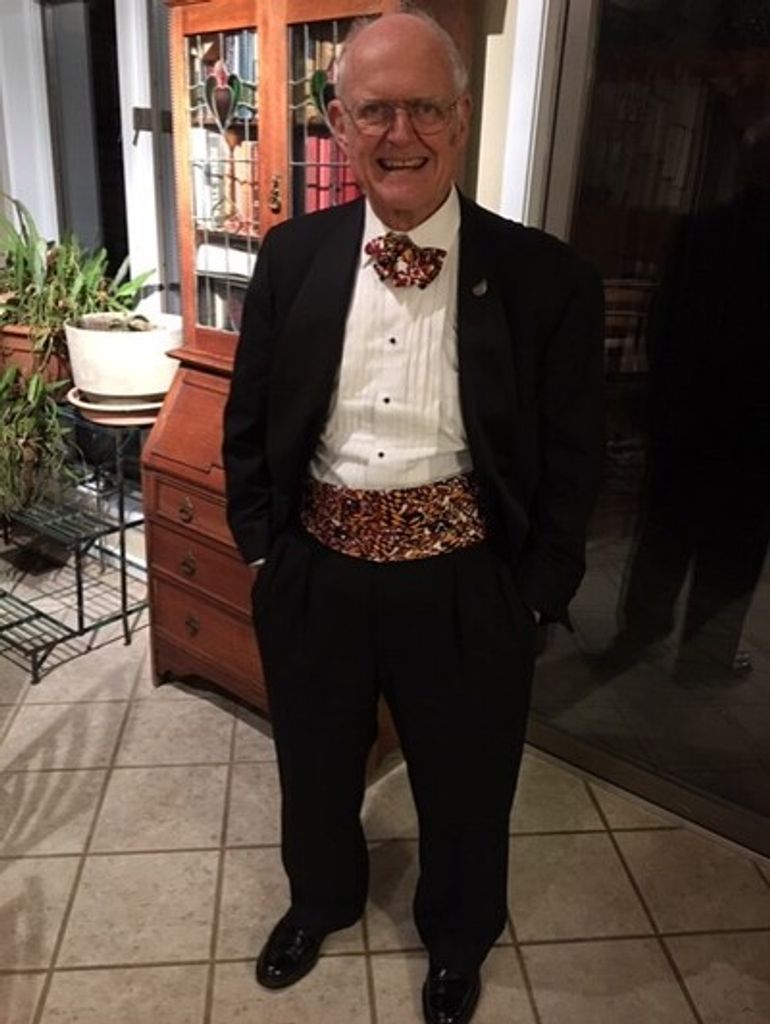
Adler, Iii
Sep 3, 1939 — Feb 27, 2021
Dr. William Henry Adler, Iii's Obituary
Bill Adler was born in September, 1939 and raised in Buffalo, NY. His father, William H. Adler Jr, was a CPA and his mother, Edith (nee Remaley) Adler, a nurse. Bill received his primary and secondary education at Buffalo's St. Joseph Institute. During Bill's freshman year in high school, he developed weakness in his arms and was diagnosed with polio. As Bill began to recover from the polio, he joined the West Side Rowing Club to help regain his strength and became the "stroke" for several of West Side's championship teams. Bill also excelled in boxing. Once after Bill won a boxing match, the losing student boxer decided to settle the score by attacking Bill on the street. Bill also won that rematch, but briefly ended up in juvenile detention until the facts of the case became clear. The youth counselor who met Bill in detention was a Harvard University graduate. Bill had assumed he would attend Notre Dame University, but upon hearing about Bill's rowing prowess, the youth counselor encouraged Bill to apply to Harvard College. Bill rowed with the Harvard Lightweight Crews all four years. Bill acknowledged that his admission to Harvard was in part due to his polio that led to his rowing, but also in part due to his boxing.
After graduating from Harvard in 1961, Bill entered medical school at the State University of New York at Buffalo (The University at Buffalo). After graduation. Bill married Charlotte Horner of Philadelphia. They moved to Gainesville, Florida for Bill to start a pediatric residency and post-doctoral fellowship in immunology with Dr. Richard Smith at the University of Florida School of Medicine. Bill and Dr. Smith were among the first to document that aging related immune system changes were predominantly due to T cell dysfunction. After serving as chief resident in pediatrics, Bill joined the faculty at the School of Medicine. The draft board, however, had other plans for Bill and in 1970 drafted him into the Army. Bill served at Fort Detrick in Maryland, with the Bio-Warfare Defense Unit. Bill and Charlotte's daughter, Ellen Yvonne, arrived in 1971 while they were stationed at Fort Detrick. Bill always said that his biggest contribution to the Viet Nam War was helping to figure out why the guard dogs that went out on patrol were dying, while the dogs that stayed on base lived.
After one of his returns from a tour in Viet Nam, Bill had to report to an Army base in the Midwest. He flew in uniform on a commercial airline. Upon landing, "hippie war protesters" were demonstrating in the airport. One "long-haired, bearded protester" spat in Bill's face, causing him reflexively to throw a left jab that knocked the protestor down with a bloodied nose. As the airport security escorted Bill away from the protestors, they asked him, "Where are you headed, soldier?" and then gave him a ride to the base.
Once discharged from the Army, Bill wanted to take a break from the political scene in America for a while. He was awarded funding from the New York Cancer Institute to conduct immunology research as a visiting scientist with Nobel Laureate, Sir Peter Medawar, at the British Clinical Research Center of the Medical Research Council in Harrow, England. Bill, Charlotte and Ellen lived in Harrow from 1972 -1974, during which time Bill (in addition to his scientific pursuits) purchased a 1954 MGTF and a 1972 BMW 2002tii. He loved tinkering on the cars and continued to drive them both around for the next 45 years.
Upon returning from England, Bill joined the U.S. Public Health Service at the National Institutes of Health (NIH) as Director of the Division of Cellular Immunobiology at the National Institute of Child Health and Human Development. This institute was charged with conducting research across the entire human lifespan. Bill's group studied the effects of growth, development and aging on immune function. The National Institute on Aging (NIA) was established in 1974. Dr. Robert Butler was appointed as NIA's first director in 1976 and invited Bill to move to Baltimore to join the NIA's Gerontological Research Center (GRC) as Chief of Clinical Immunology Research. When Bill started his training in immunology, it was the pediatricians that had the interest and research skills in immunology, since the immune deficiency disorders were almost exclusively the inherited diseases of children. It was the pediatricians that joined NIA to study the immunology of aging. During his 20 years at the NIA/GRC, Bill had voluntary faculty appointments at Johns Hopkins University and University of Maryland Schools of Medicine.
When the mysterious immunodeficiency disease of gay men emerged in the early 1980's, Bill's lab at the NIA/GRC was one of the few in the country that could safely handle unknown infectious materials. He received specimens to analyze from many geographic areas. His group described one of the early cases of pediatric AIDS. Bill's research in the 1980's included many studies on HIV and the effect of aging on the trajectory of AIDS.
Personal tragedy struck Bill in 1993 when his wife of 28 years, Charlotte, died unexpectedly and tragically. Bill's daughter Ellen graduated from Harvard College shortly after Charlotte's death, and then went to Nepal to teach English as a second language. In 1995, Bill married Rebecca Elon, MD.
Bill retired from NIA in 1997. He knew many of the scientists who had set out to develop various biotechnology companies and enjoyed analyzing the early biotech companies that were publicly traded. Bill hired Harvard undergraduates to help him analyze the companies from both a scientific and business perspective. After following several biotech companies in a "mock fund," Bill established a small partnership biotech fund, acting as the managing partner. This type of fund was deemed "SEC exempt" at the time it was established and functioned more like an investment club, Bill did very well with this and loved to write to club members about the various scientific aspects of biotechnology. After the financial collapse of 2008, however, the subsequent Dodd-Frank legislation eliminated the category of Bill's fund. In order to be in compliance with the new regulations, Bill would have had to register with FINRA as well as the SEC, become a certified financial advisor, and complete a mountain of paper work. Bill realized he had no choice but to close the fund, much to his disappointment. (Of note. Bill and Senator Barney Frank, who co-sponsored this legislation, were in the same college dormitory during their mutual freshman year at Harvard.)
Bill was an active member of the Harvard Club of Maryland since the mid 1970's, interviewing high school students from Maryland who were applying to Harvard College. He enjoyed advocating for applicants who he felt might have been overlooked in the general admissions process. This included a Baltimore City youth whose first interview with another interviewer went poorly. Bill saw unique potential in this young man who attended a public school. Bill gave the applicant a second interview and advocated for him with the admissions committee. Brandon Terry was admitted to Harvard College and after spending postgraduate time at Oxford and earning his PhD at Yale, returned to join the Harvard faculty of Arts and Sciences. In 1990, Bill became an appointed director of the Harvard Alumni Association and in 1994 became an elected director. Bill also enjoyed doing mock interviews with local high school students working on their interviewing skills.
Bill trained a number of international scientists during his years at NIH, including several from Japan, India and China. In 1997, his former Japanese fellows invited Bill to visit and lecture at their medical schools in Japan. One of Bill's Chinese fellows had served in the medical core during the Tiananmen uprising, rescuing the wounded when the violence erupted. When Tiananmen participants were given a pathway to become U.S. citizens by President George H.W. Bush, Bill was able to help Dr. Li Jun Song obtain a clinical training spot at Hopkins. Dr. Song was so grateful to Bill, he named his first born son William in Bill's honor.
Bill was an avid sailor - cruising, day sailing and racing his J105 on the Chesapeake Bay and Magothy River, He took up sculling and could be seen rowing on the Magothy River most mornings, weather willing. When he could no longer row, he donated his 4 single rowing shells to the Annapolis Rowing Club. Bill enjoyed building and sailing radio controlled model yachts.
His daughter Ellen and son-In-law, Matt O'Connell, live in Annapolis where Bill's two grandsons, Liam and John attend St. Mary's High School, Bill had one brother, Robert Adler, who preceded him in death. Bill is survived by his wife Rebecca Elon, daughter Ellen O'Connell (Matt), grandsons William (Liam) and John O'Connell, sister-in-law Susan Matoba Adler, nephew Michael Patrick Adler, and numerous cousins.
Bill was a communicant at St. John the Evangelist Catholic Church of Severna Park, Maryland. His funeral mass will be held at St. John the Evangelist at 10 am on Monday March 8, 2021 followed by burial at Dulaney Valley Memorial Gardens in Timonium, Maryland. Arrangements are through Barranco Severna Park Funeral Home & Cremation Care, P.A. in Maryland. Bill's funeral mass will be live streamed for those who love Bill but are unable to attend at the following link:
https://boxcast.tv/view/in-loving-memory---dr-william-henry-adler-iii-ydgqyiaxpfhvjr1zbpoj
In lieu of flowers, donations can be made in Bill's memory to Catholic Charities 320 Cathedral Street Baltimore Maryland 21201 or Catholic Relief Services 228 W Lexington Street Baltimore Maryland 21201.
Dr. William Henry Adler, Iii's Guestbook
Visits: 61
This site is protected by reCAPTCHA and the
Google Privacy Policy and Terms of Service apply.
Service map data © OpenStreetMap contributors