
Share Stanley Lebar's obituary with others.
Invite friends and family to read the obituary and add memories.
Stay updated
We'll notify you when service details or new memories are added.
You're now following this obituary
We'll email you when there are updates.
Select your format and elements to print

IN LOVING MEMORY OF Stanley Lebar
Stanley
Lebar
Jul 29, 1925 — Dec 23, 2009
Stanley Lebar's Obituary
Listen to Obituary
The Severna Park resident who designed the camera that recorded astronaut Neil Armstrong's landing on the moon 40 years ago has died.
Photos by G. Nick Lundskow — The Capital / file
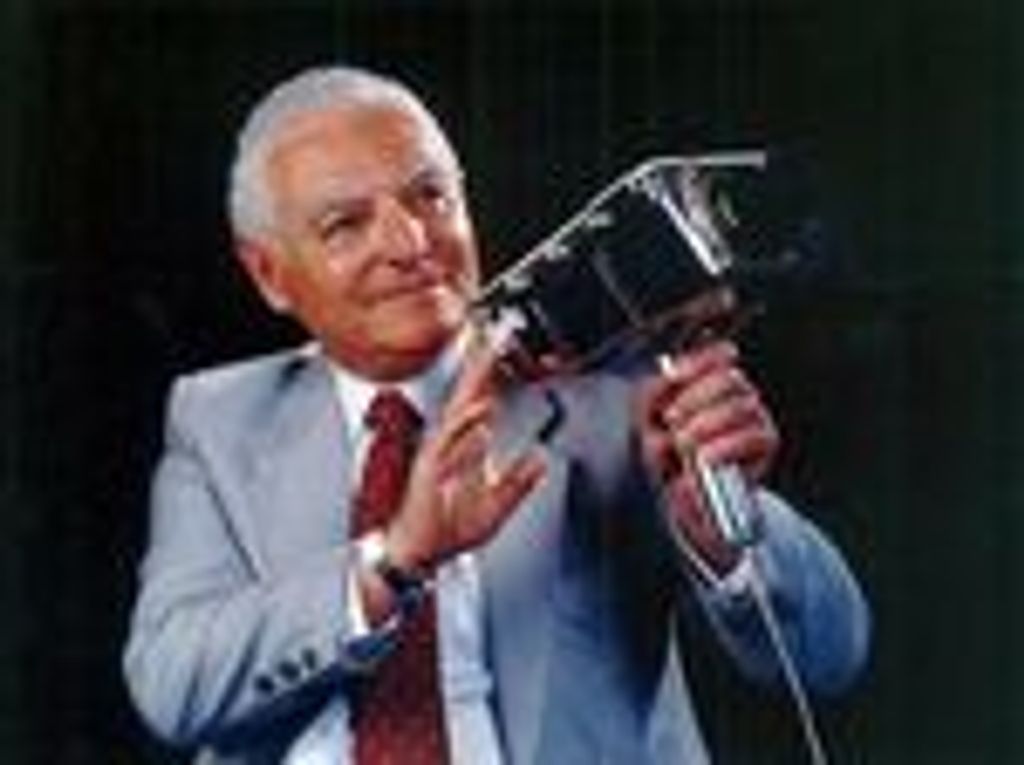
TOP: Stan Lebar holds a replica, in 1994, of the video camera her developed at Westinghouse that was used to broadcast live images back to Earth from the Apollo 11 moon landing. Nearby is the Emmy he received for the achievement. BOTTOM: Mr. Lebar stands with Apollo 11 command module pilot Michael Collins in 1989.
Advertisement Stanley Lebar, a retired electrical engineer with Westinghouse Electric Corp., died on Wednesday from complications following a recent surgery. He was 84.
Lebar's engineering breakthrough introduced the world to electrical miniaturization.
Engineers have said jokingly of Lebar's contribution: All he had to do was design a camera that would weigh about one-fiftieth of what TV studio cameras weighed, survive temperatures ranging from 250 degrees to minus 300 degrees Fahrenheit, and withstand a liftoff pressure of eight times the force of gravity. Oh, and it had to operate without a backup - 240,000 miles from home base.
TV studio cameras of the time weighed as much as 400 pounds apiece, but the 7-pound camera that Lebar and his team of engineers designed worked beautifully. Because of the invention, an estimated 600 million people around the world were able to watch as Armstrong stepped down from lunar module Eagle, kicked up a little puff of moon dust and said, "That's one small step for (a) man, one giant leap for mankind."
"That was the most excruciating time that I can remember," Lebar said in July of this year, recounting the footage that was broadcast around the world on July 20, 1969.
"The (Westinghouse) company asked me to be the spokesmen were something to go wrong. So while I was praying that it worked so that everyone would have it, I was really praying because I didn't want to have to go on and explain why it didn't work."
NASA eventually lost or destroyed the original raw footage of the moon landing, and Lebar worked with NASA engineers to restore the images from whatever snippets they could find.
In July of this year, Lebar's son, Scott Lebar, a journalist with the Scaramento Bee, interviewed his father.
The senior Lebar explained what the lunar camera had meant to him.
"Just imagine," Stan Lebar said, "if you had video of the Pilgrims landing on Plymouth Rock. Wouldn't you want to see that? Wouldn't you want that for everyone? That's what this is, and we're trying to preserve it for history and future generations."
NASA engineer Richard Nafzger worked with Lebar 40 years ago on the Apollo space program, and again in the last five years to restore the 1969 footage.
Nafzger said Lebar saw the completed DVD of the restored footage two days before he died.
"He never stopped," Nafzger said of Lebar's life-long drive and enthusiasm.
"I found him to be the most amazing, funny, knowledgeable man about the Apollo program that I ever met," Nafzger said on Thursday. "He had a hell of a sense of humor ... Stan believed if you didn't keep doing things to keep your mind active, you weren't going to exist."
The Historical Electronics Museum in Linthicum has one of the 10 original cameras the Lebar-led team at Westinghouse designed. Lebar and his colleagues won an Emmy award some years ago for their contributions to television.
Active life
Stan Lebar was more than an acclaimed scientist. The father of three children - two doctors and an editor - he also was active in the Anne Arundel County Jewish community. In 1960, Lebar was a founding member of Temple Beth Shalom in Arnold, and the first organizational meeting was held in his home, according to Rabbi Ari Goldstein.
"He was a man of principle and conviction," Goldstein said. "He was an insightful man, he was a patient man, a man of vision and a man of integrity."
Lebar enjoyed the outdoors, and was a founder of the Friends of Baltimore Annapolis trail.
Scott Lebar said his dad set high standards and could be "withering" in his criticism when someone fell short.
"He had a powerful intellect, tremendous drive and an unbelievable refusal to fail," Scott Lebar said. "And at the same time, he was the kindest, most caring man that I have ever known."
Stan Lebar grew up a child of the Depression in Brooklyn, N.Y., where a nickel was hard to come by, and when he could get one, he went to the movies. He graduated from the University of Missouri and served in the Army Air Force in World War II.
"If you look at his whole life, this is a guy who lived the full and rich American life we all aspire to," Scott Lebar said.
Lebar's other son, Dr. Mark Lebar, said his father set high standards for himself and for others, and was not quick to compromise.
"He lived life on his terms, and with a great sense of humor," Mark Lebar said. "Believe me, it was on his terms, and it didn't matter who he was talking with, it was on his terms."
Final arrangements
Lebar's survivors include his wife of 61 years, Elaine Lebar, and his oldest child, Dr. Mark Lebar of St. Leonard, Md., and his wife, Sarah Lebar and their son Joshua Lebar and daughter Jordan Lebar.
Stan Lebar also is survived by his middle child, Scott Lebar of Sacramento, Calif., and his wife, Mary Lynn Perry and their daughters Andrea Lebar and Julia Linsteadt and son-in-law Nik Linsteadt.
Stan Lebar's youngest child, Dr. Randi Lebar, resides in Springvale, Maine, with her husband, Dr. Kent Shomaker and son Caleb Shomaker.
Funeral arrangements are being handled by Barranco & Sons Funeral Home of Severna Park. There will be a viewing on Wednesday at 8:30 a.m. at Temple Beth Shalom, with the funeral to follow at 10 a.m. Burial will be at 11:30 a.m. at the Crownsville Veterans Cemetery.
As published in The Capital Newspaper December 26, 2009
Photos by G. Nick Lundskow — The Capital / file
TOP: Stan Lebar holds a replica, in 1994, of the video camera her developed at Westinghouse that was used to broadcast live images back to Earth from the Apollo 11 moon landing. Nearby is the Emmy he received for the achievement. BOTTOM: Mr. Lebar stands with Apollo 11 command module pilot Michael Collins in 1989.
Advertisement Stanley Lebar, a retired electrical engineer with Westinghouse Electric Corp., died on Wednesday from complications following a recent surgery. He was 84.
Lebar's engineering breakthrough introduced the world to electrical miniaturization.
Engineers have said jokingly of Lebar's contribution: All he had to do was design a camera that would weigh about one-fiftieth of what TV studio cameras weighed, survive temperatures ranging from 250 degrees to minus 300 degrees Fahrenheit, and withstand a liftoff pressure of eight times the force of gravity. Oh, and it had to operate without a backup - 240,000 miles from home base.
TV studio cameras of the time weighed as much as 400 pounds apiece, but the 7-pound camera that Lebar and his team of engineers designed worked beautifully. Because of the invention, an estimated 600 million people around the world were able to watch as Armstrong stepped down from lunar module Eagle, kicked up a little puff of moon dust and said, "That's one small step for (a) man, one giant leap for mankind."
"That was the most excruciating time that I can remember," Lebar said in July of this year, recounting the footage that was broadcast around the world on July 20, 1969.
"The (Westinghouse) company asked me to be the spokesmen were something to go wrong. So while I was praying that it worked so that everyone would have it, I was really praying because I didn't want to have to go on and explain why it didn't work."
NASA eventually lost or destroyed the original raw footage of the moon landing, and Lebar worked with NASA engineers to restore the images from whatever snippets they could find.
In July of this year, Lebar's son, Scott Lebar, a journalist with the Scaramento Bee, interviewed his father.
The senior Lebar explained what the lunar camera had meant to him.
"Just imagine," Stan Lebar said, "if you had video of the Pilgrims landing on Plymouth Rock. Wouldn't you want to see that? Wouldn't you want that for everyone? That's what this is, and we're trying to preserve it for history and future generations."
NASA engineer Richard Nafzger worked with Lebar 40 years ago on the Apollo space program, and again in the last five years to restore the 1969 footage.
Nafzger said Lebar saw the completed DVD of the restored footage two days before he died.
"He never stopped," Nafzger said of Lebar's life-long drive and enthusiasm.
"I found him to be the most amazing, funny, knowledgeable man about the Apollo program that I ever met," Nafzger said on Thursday. "He had a hell of a sense of humor ... Stan believed if you didn't keep doing things to keep your mind active, you weren't going to exist."
The Historical Electronics Museum in Linthicum has one of the 10 original cameras the Lebar-led team at Westinghouse designed. Lebar and his colleagues won an Emmy award some years ago for their contributions to television.
Active life
Stan Lebar was more than an acclaimed scientist. The father of three children - two doctors and an editor - he also was active in the Anne Arundel County Jewish community. In 1960, Lebar was a founding member of Temple Beth Shalom in Arnold, and the first organizational meeting was held in his home, according to Rabbi Ari Goldstein.
"He was a man of principle and conviction," Goldstein said. "He was an insightful man, he was a patient man, a man of vision and a man of integrity."
Lebar enjoyed the outdoors, and was a founder of the Friends of Baltimore Annapolis trail.
Scott Lebar said his dad set high standards and could be "withering" in his criticism when someone fell short.
"He had a powerful intellect, tremendous drive and an unbelievable refusal to fail," Scott Lebar said. "And at the same time, he was the kindest, most caring man that I have ever known."
Stan Lebar grew up a child of the Depression in Brooklyn, N.Y., where a nickel was hard to come by, and when he could get one, he went to the movies. He graduated from the University of Missouri and served in the Army Air Force in World War II.
"If you look at his whole life, this is a guy who lived the full and rich American life we all aspire to," Scott Lebar said.
Lebar's other son, Dr. Mark Lebar, said his father set high standards for himself and for others, and was not quick to compromise.
"He lived life on his terms, and with a great sense of humor," Mark Lebar said. "Believe me, it was on his terms, and it didn't matter who he was talking with, it was on his terms."
Final arrangements
Lebar's survivors include his wife of 61 years, Elaine Lebar, and his oldest child, Dr. Mark Lebar of St. Leonard, Md., and his wife, Sarah Lebar and their son Joshua Lebar and daughter Jordan Lebar.
Stan Lebar also is survived by his middle child, Scott Lebar of Sacramento, Calif., and his wife, Mary Lynn Perry and their daughters Andrea Lebar and Julia Linsteadt and son-in-law Nik Linsteadt.
Stan Lebar's youngest child, Dr. Randi Lebar, resides in Springvale, Maine, with her husband, Dr. Kent Shomaker and son Caleb Shomaker.
Funeral arrangements are being handled by Barranco & Sons Funeral Home of Severna Park. There will be a viewing on Wednesday at 8:30 a.m. at Temple Beth Shalom, with the funeral to follow at 10 a.m. Burial will be at 11:30 a.m. at the Crownsville Veterans Cemetery.
As published in The Capital Newspaper December 26, 2009
To send flowers or plant a memorial tree in memory, please visit our flower store.
Stanley Lebar's Guestbook
Visits: 39
This site is protected by reCAPTCHA and the
Google Privacy Policy and Terms of Service apply.
Service map data © OpenStreetMap contributors